Skip to content
Skip to main content
Connect WeChat Customer Service

AIP

Connect WeChat Customer Service

Connect your Agent to WeChat Customer Service to answer customers in WeChat.

Before you start

Prepare an enabled Agent and a WeCom administrator account.

1

Prepare the WeCom app

In the WeCom admin console, open App Management → Custom Apps and create or select the app for this integration. Set its name, icon, and visibility.
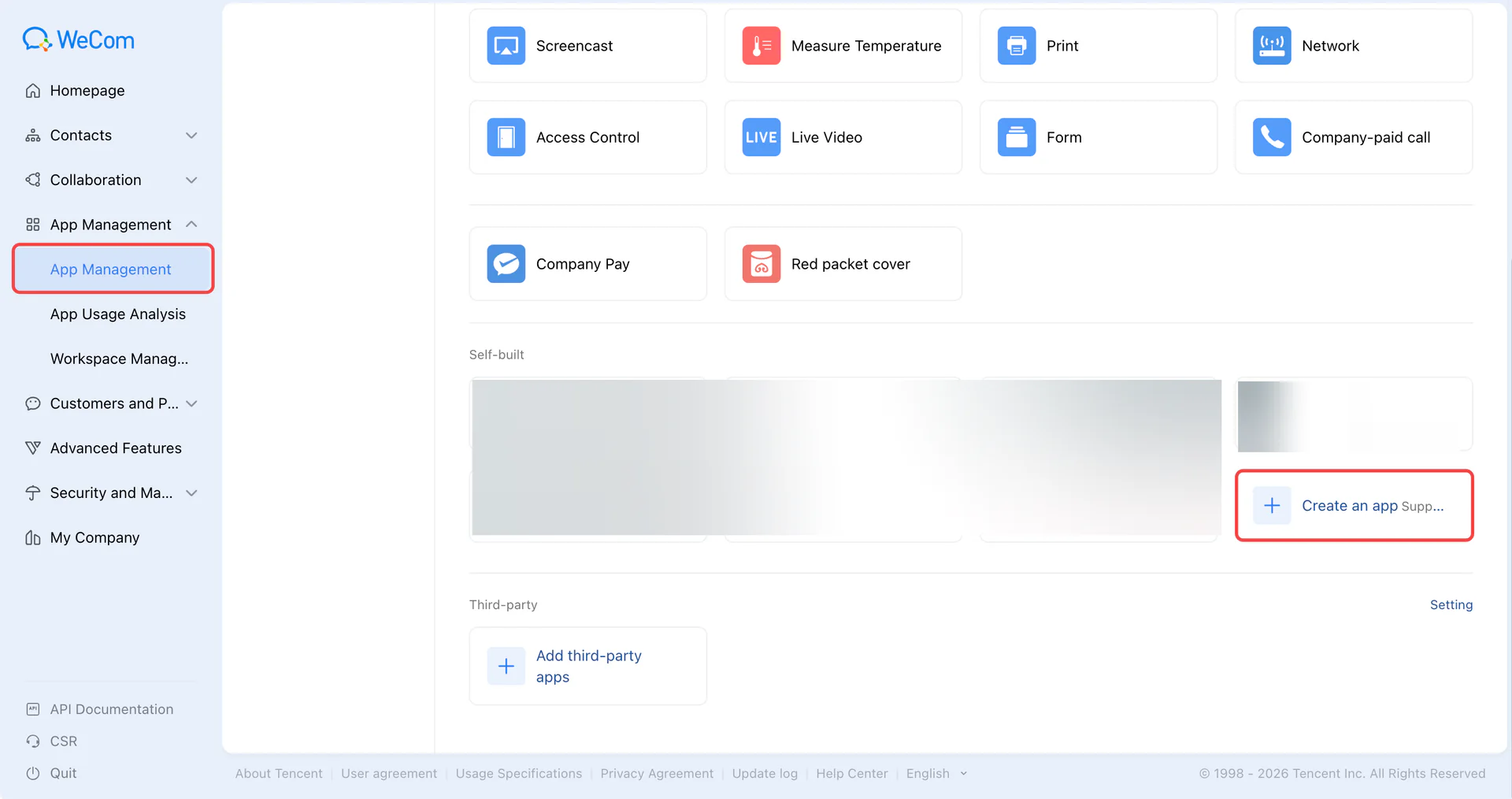
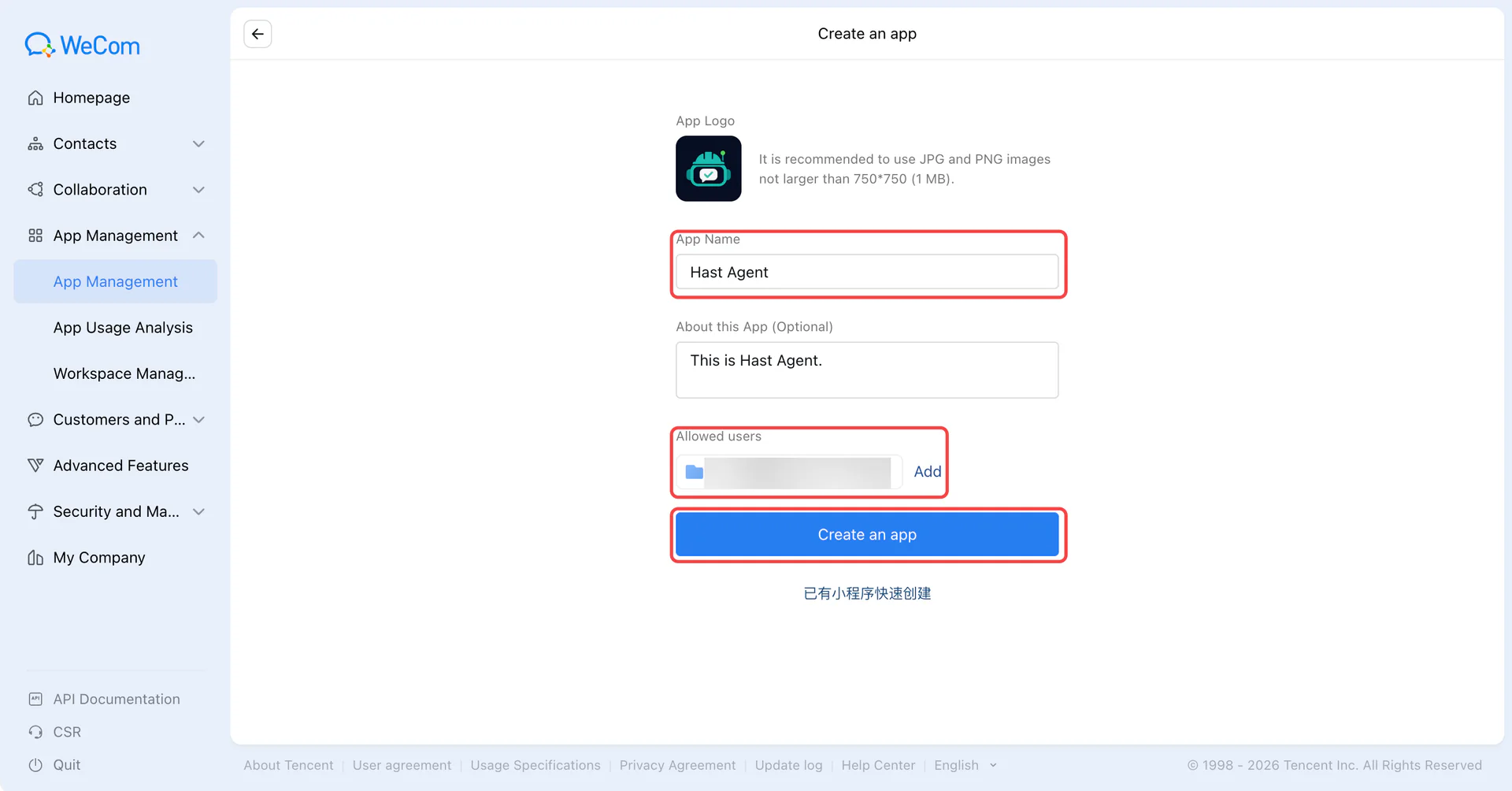
Create a custom appApp details

Copy the Corp ID from My Enterprise → Enterprise Information.
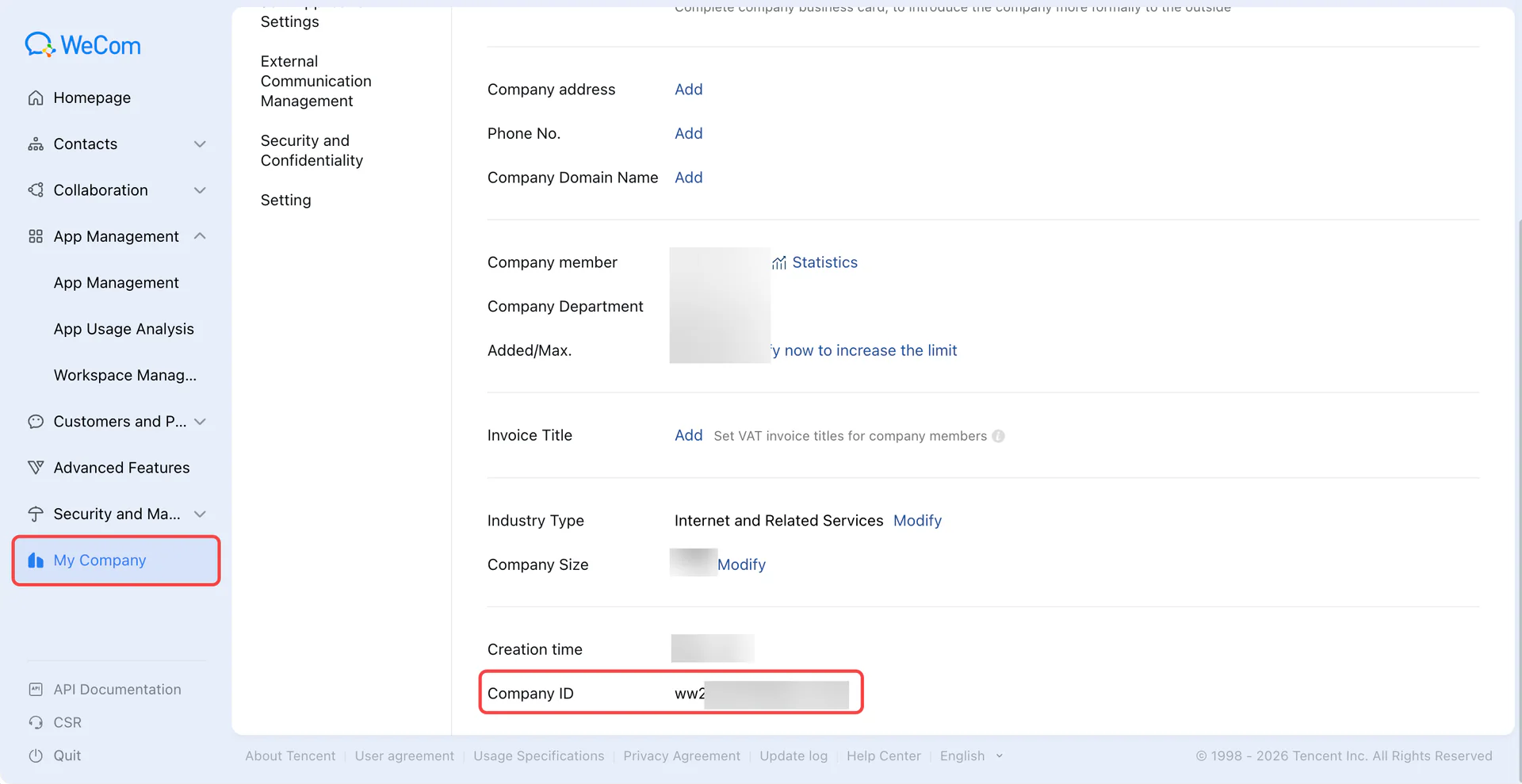
Corp ID location
2

Prepare callback credentials

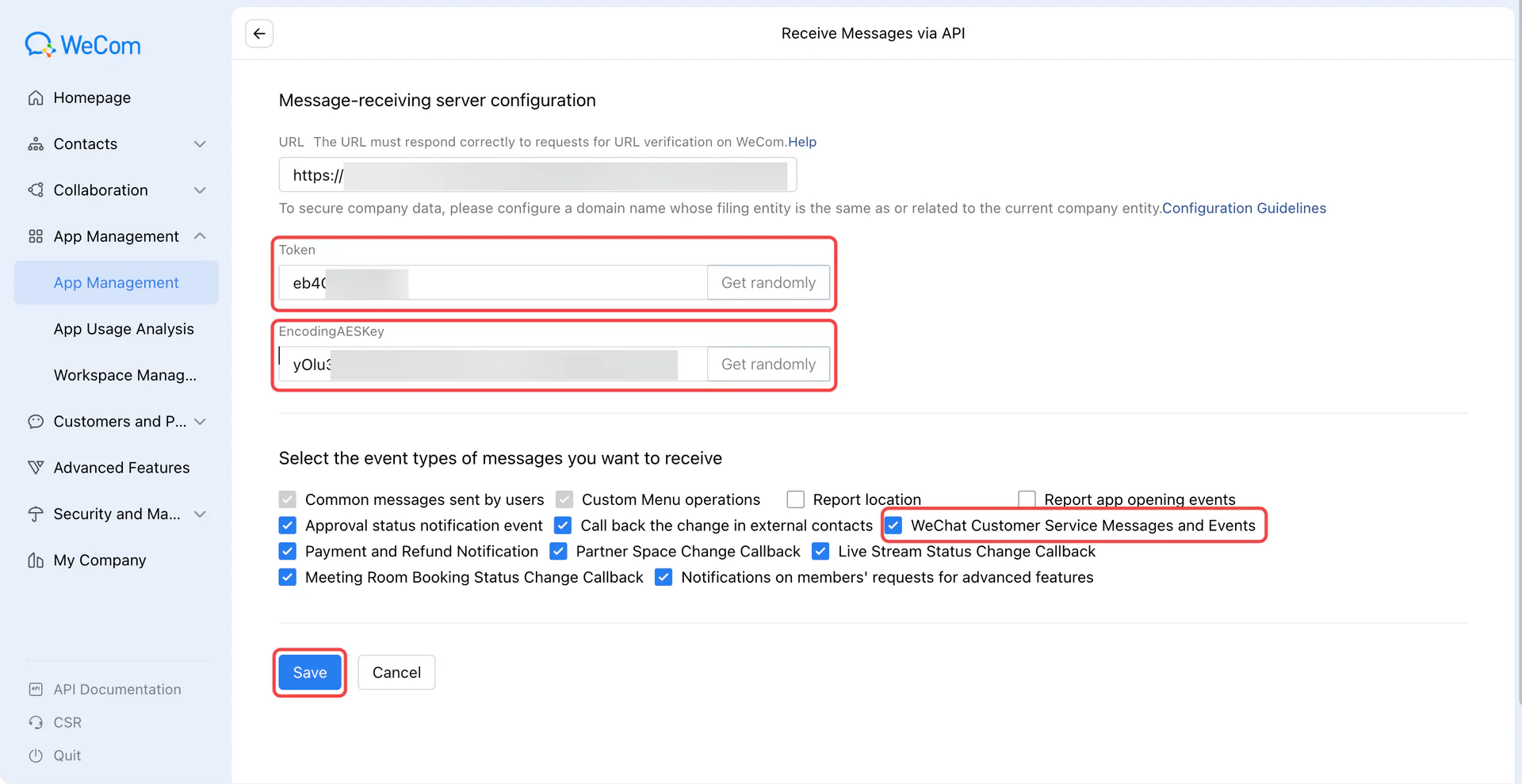
Return to the app and open Receive Messages → Set API Reception. Generate and save the Token and EncodingAESKey. Leave URL submission for later.
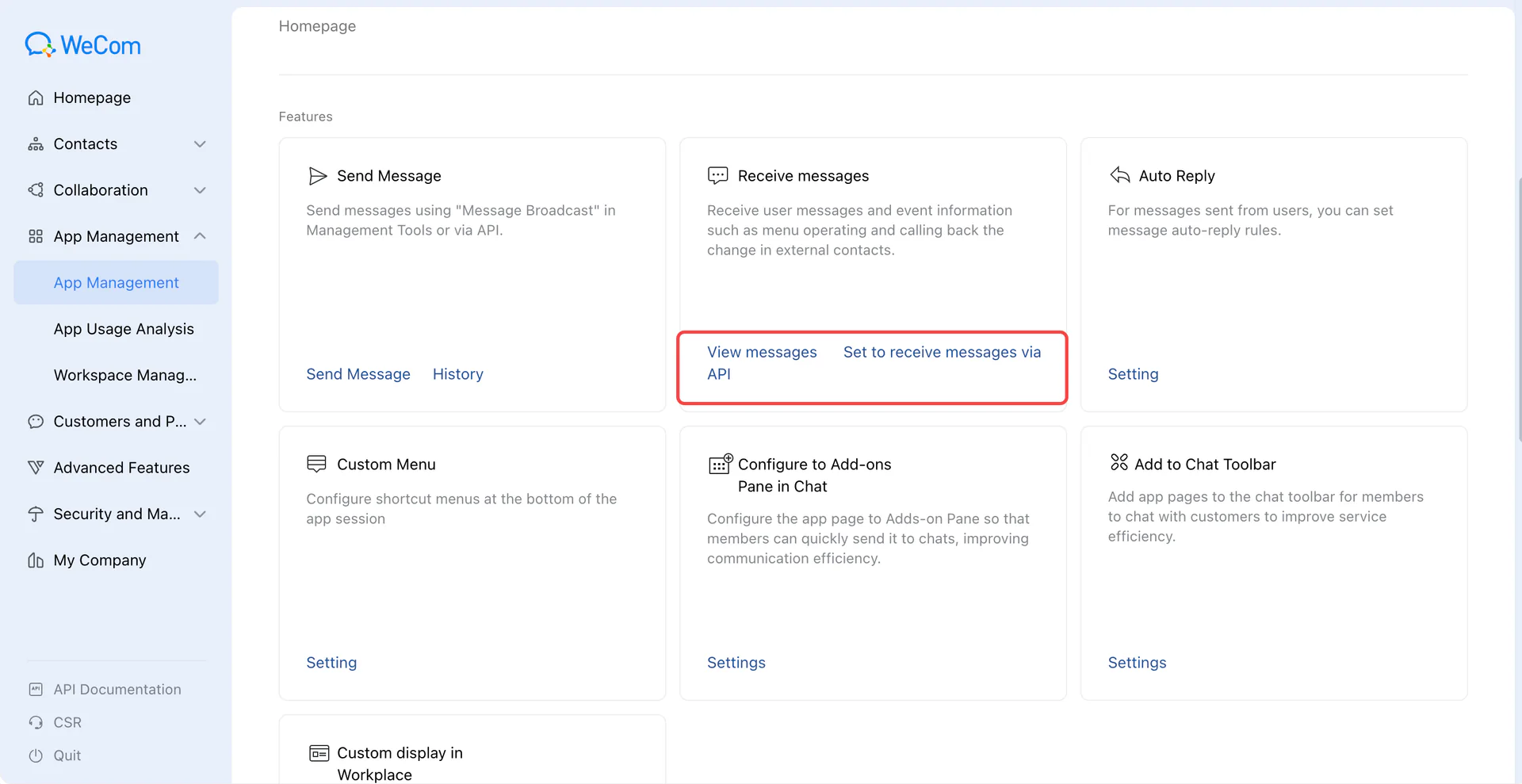
API reception settings
FieldValue
TokenGenerated verification string, 3–32 characters
EncodingAESKeyComplete generated 43-character encryption key
3

Create the AIP channel

Add a WeChat Customer Service channel in AIP. Enter its name, Corp ID, Token, and EncodingAESKey. After creation, open the installation settings for the callback URL, domain verification address, and trusted IPs.

4

Verify the domain and trusted IPs

If domain verification is required

Download the WW_verify_*.txt file from WeCom and upload it unchanged in AIP’s channel installation settings (up to 4 KiB). Open its public URL and check the original content, then verify in WeCom. Enter only the supplied domain in the domain field, without the /webhooks/ path.
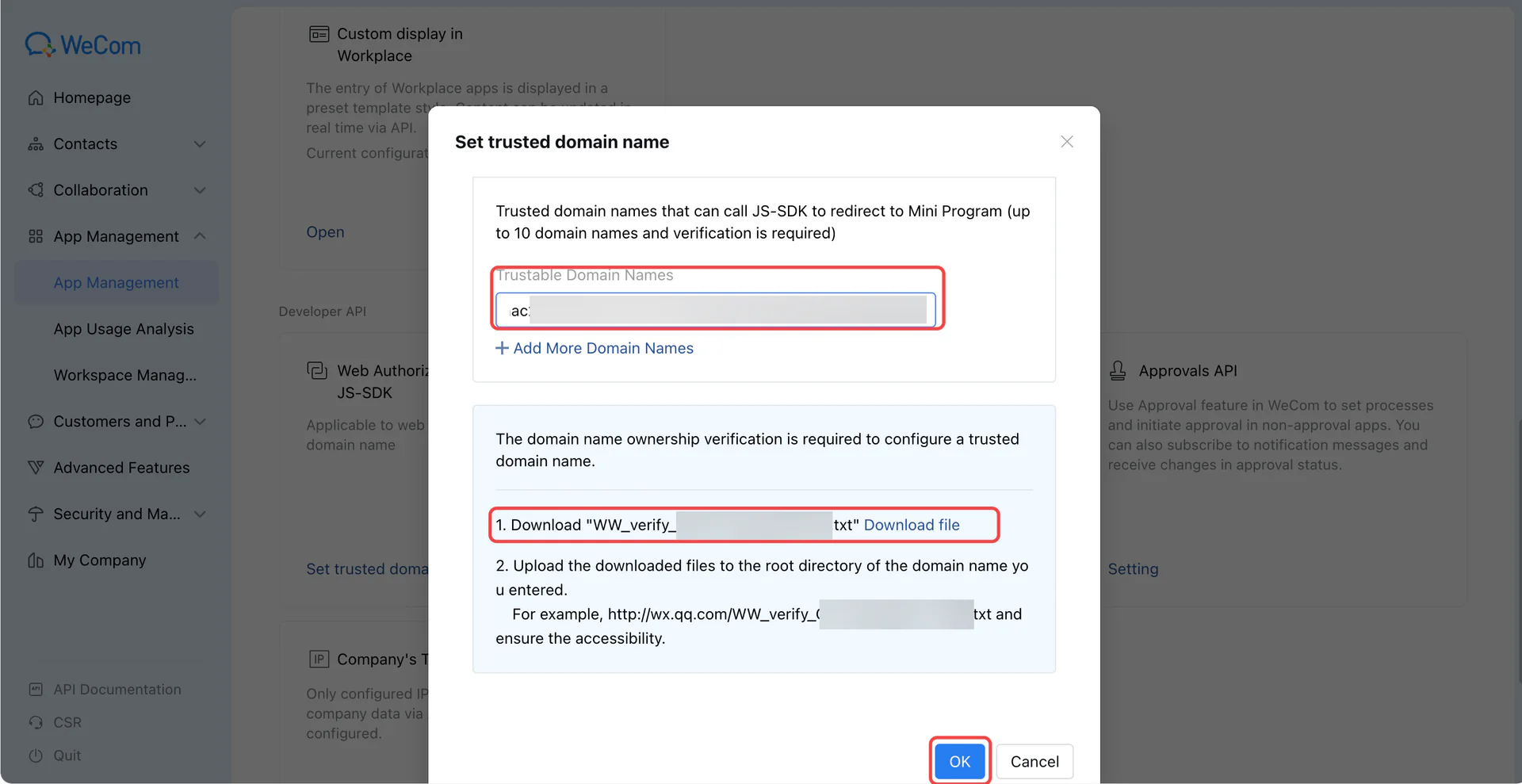
Domain verification file and button

Add every IP listed in AIP’s installation settings to the app’s trusted IP list and save.

5

Save callback settings

Return to API message reception, complete these fields, and save.

FieldSetting
URLComplete AIP callback URL, including /webhooks/wechat_kf/
Token, EncodingAESKeySame values used to create the AIP channel
EventsEnable WeChat Customer Service messages and events
Callback fields and customer service events
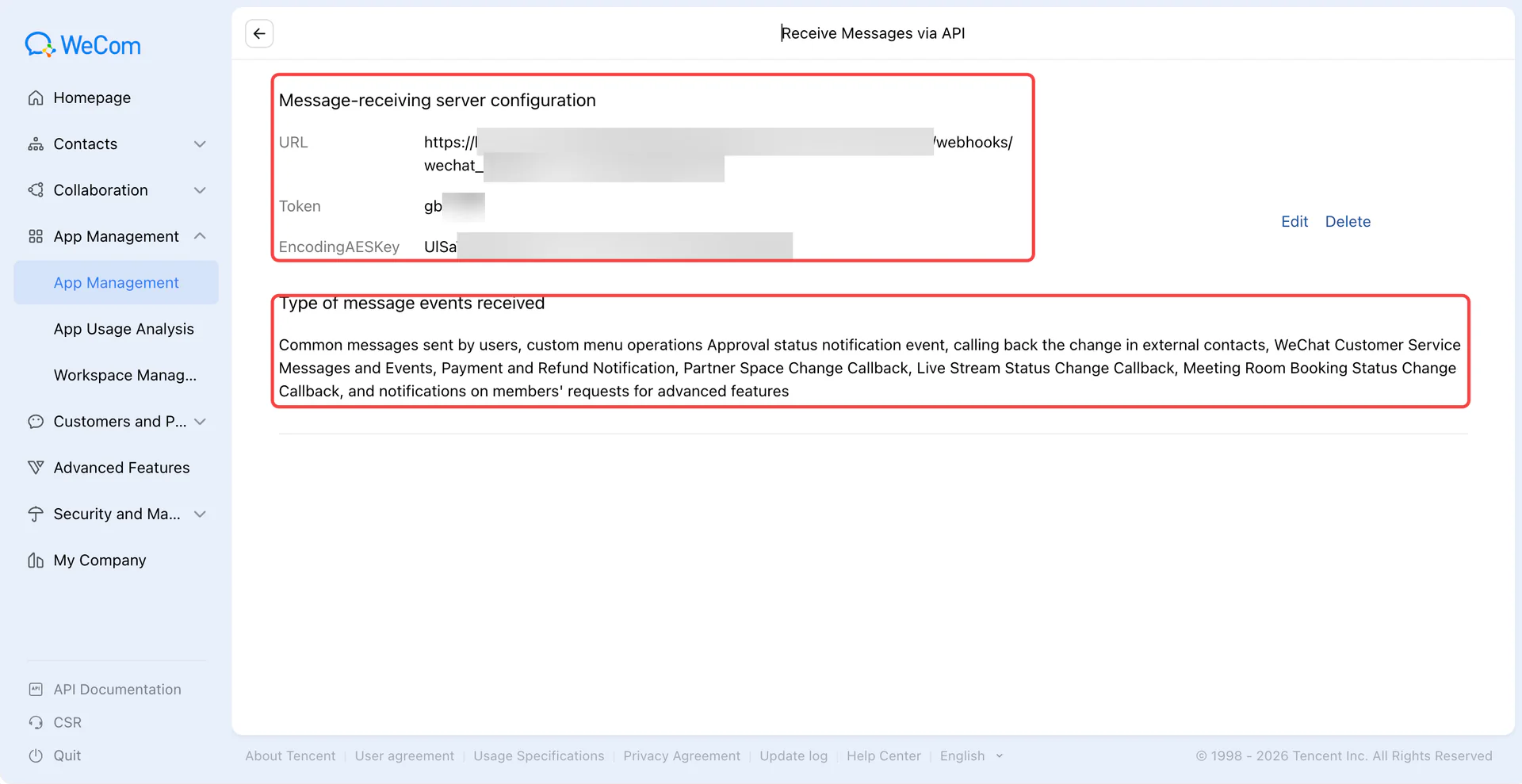
View the saved settings
Example of saved callback settings
6

Authorize customer service accounts

Open WeChat Customer Service and create or select a service account with its name and avatar.
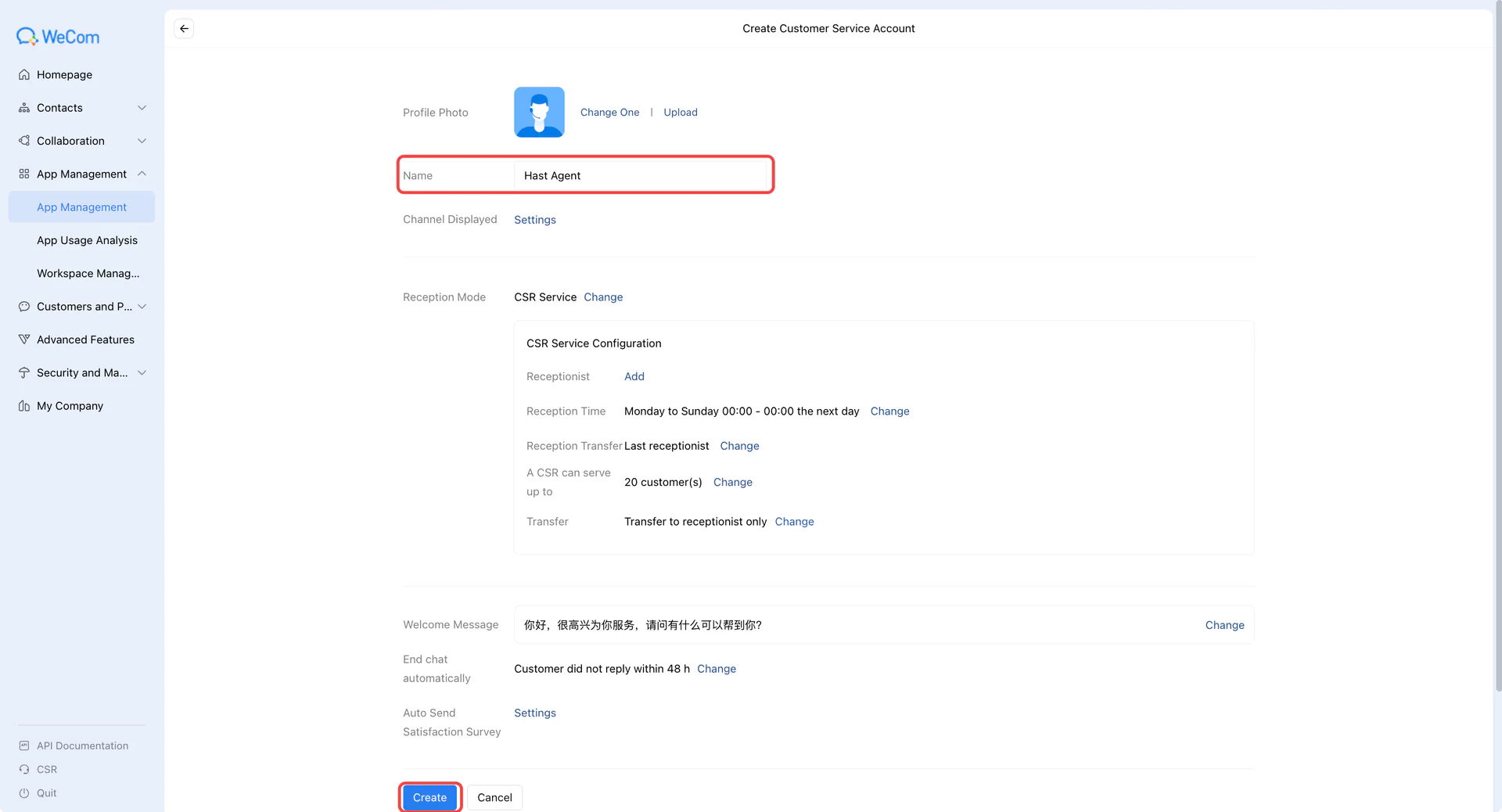
Create a service account

Expand the account’s API settings. Edit Apps Allowed to Call APIs and select the app created earlier.
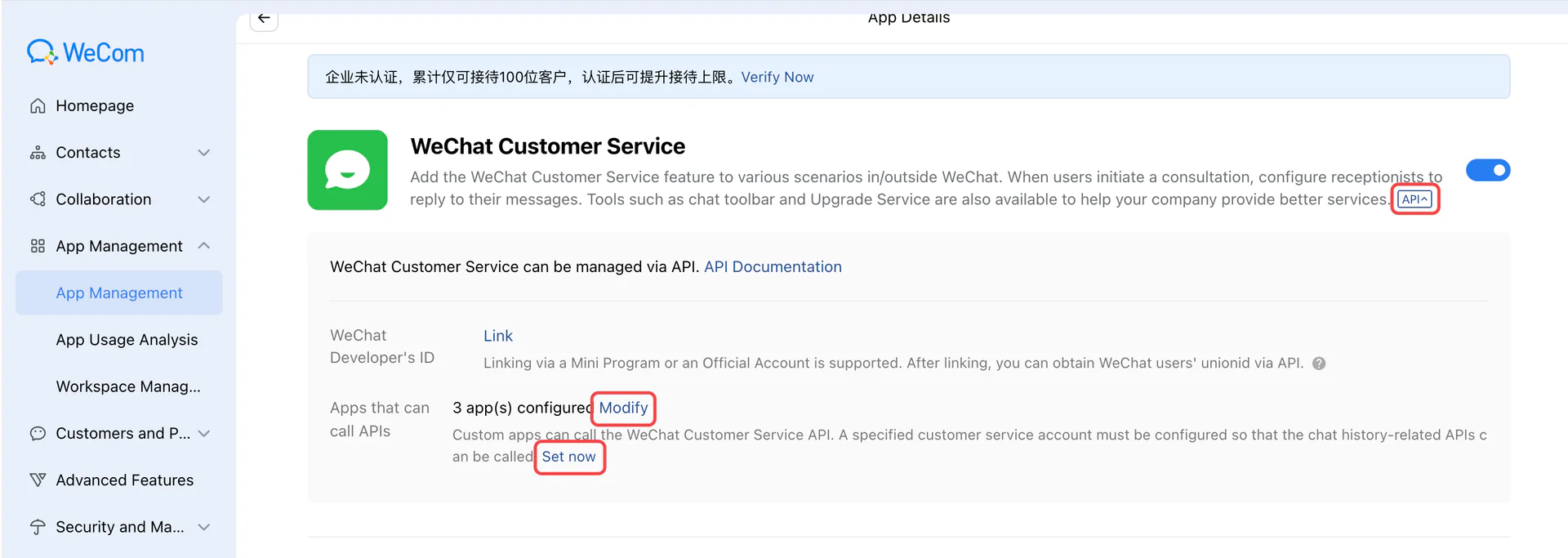
Service account API settings

In Internal Development, associate the service account with that app and confirm the app can manage it.
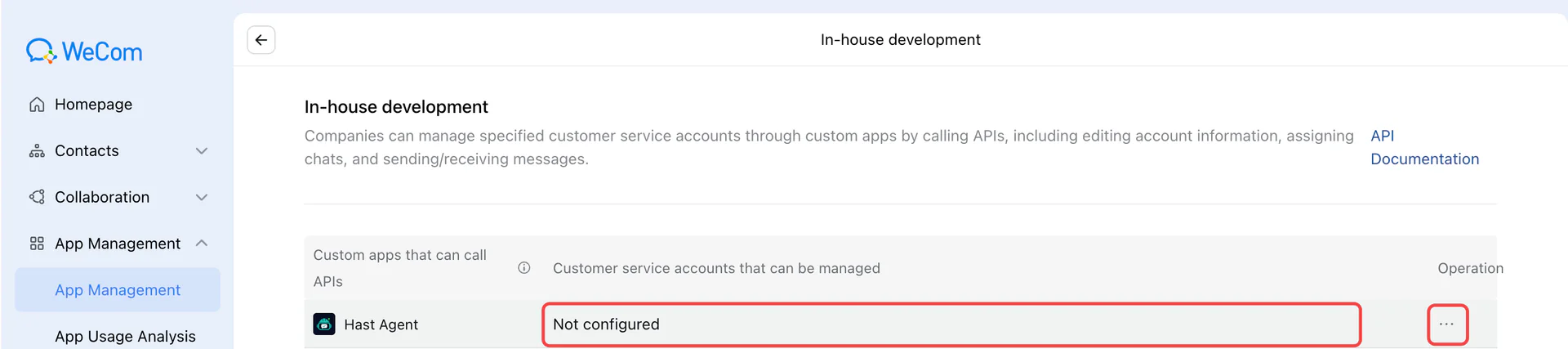

Choose the authorized appAssociate the app and service account
7

Finish installation in AIP

In the authorized app’s details, select View Secret and follow WeCom’s instructions to retrieve it in the client.
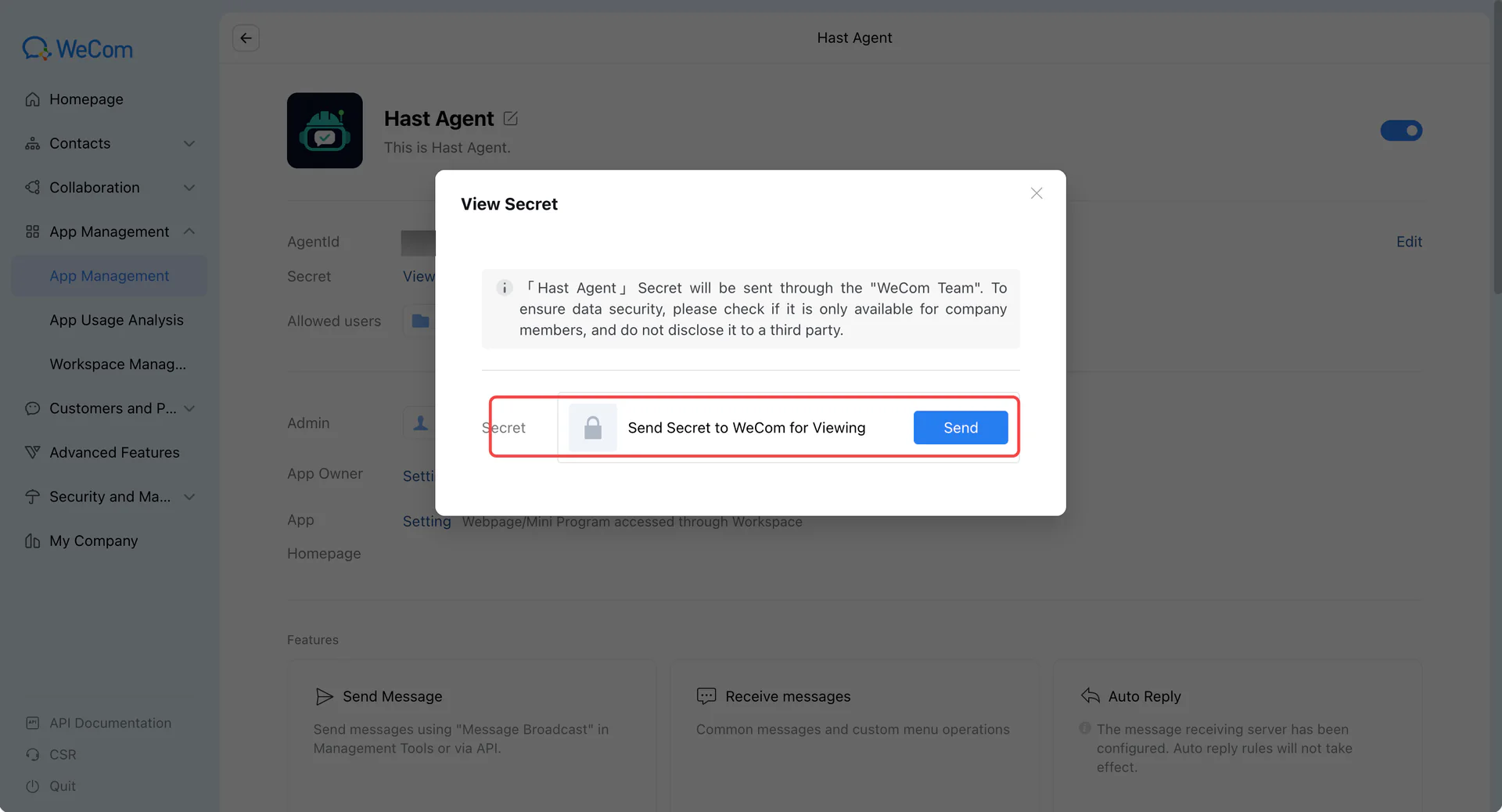
View the app Secret

Return to AIP’s installation settings, enter the Secret, fetch the service account list, and select the target by name. Complete verification and bind an enabled Agent. A single manageable account is selected automatically.

8

Test replies in WeChat

Use a customer’s WeChat account to open the service link or scan its QR code. Send a message and confirm the Agent’s reply, then test an image or voice message.

Troubleshooting

Domain or callback verification fails

Check that the verification file is publicly accessible and unchanged. Use the complete callback URL and matching Token and EncodingAESKey on both sides.

Cannot load service accounts

Check the enterprise and app associated with the Corp ID and Secret, customer service authorization, and all required trusted IPs.

Messages arrive without replies

Check customer service events, Agent status, channel admission, and platform reply restrictions. Give an administrator the service name, send time, and error code.

Meet HastLearn about Hast AIP, Hast Agent, Hast GTM, and delivery with the FDE team.About AIPConfigure Agents and connect business systems using the FDE delivery workbench.Create your first AgentConfigure, save, and debug an Agent without external services.Configure and manage AgentsSet responsibilities, models, and capabilities, and maintain the active configuration.Manage SkillsWrite, import, and select the skill files used by Agents.Add a knowledge baseIndex URLs or files so an Agent can retrieve information from them.Manage business secretsStore credentials and bind them to Agents without exposing real values in examples.Connect business toolsLet Agents call HTTP services with explicit inputs and authentication.Configure long-term memoryChoose what memory an Agent can read and where new memory is written.Debug an AgentTest saved configurations, conversation continuity, and tool results.Import, export, and copyReuse configurations and recheck resources and credentials after migration.HTTP integrationInvoke an Agent from your server, continue conversations, read replies, and stop execution.MCP integrationConnect external Agent clients to AIP tools with a Public API Key.Connect SlackBring your Agent into Slack to ask questions, work with files, and collaborate with your team in channels or direct messages.Connect WhatsAppLet customers ask questions, share files, and get replies from your Agent in WhatsApp.Connect WeChat Customer ServiceConnect your Agent to WeChat Customer Service to answer customers in WeChat.About Task AgentPlan, execute, and deliver complete tasks with tools, files, and lasting context.Complete your first taskSubmit a request, review the plan, and inspect the final output.Plan, execute, and manage conversationsRefine plans, stop execution, and manage conversation history.Upload, view, and download filesProvide inputs and keep the files created by your tasks.Connect apps and configure capabilitiesAuthorize external apps and maintain context across tasks.Create scheduled tasksSet recurrence and timezone, then inspect each run's result.Task Agent troubleshootingCheck access, connections, task state, and files.API quickstartCreate a key, submit a task, and read execution results.Event streamingRead SSE frames, resume after disconnection, and interpret Event v2.API referenceExplore public endpoint parameters, authentication, and response schemas.About GTMUse a shared website project for research, visibility analysis, and marketing drafts.Create your first GTM projectEnter a website, wait for initialization, and inspect the first results.Manage projects and website contextSwitch projects, refresh site information, and manage project settings.Company analysis and project documentsReview product, competitor, and marketing context before content tasks.SEO and website performanceRead PageSpeed reports for mobile and desktop.AI brand mentionsInspect buyer questions and whether model answers mention your brand.Connect Google AnalyticsAuthorize an account, choose a GA property, and inspect traffic reports.Generate and publish X draftsCreate posts, review previews, and finish publishing on X.Generate article draftsSet style, language, and audience, then review and copy Markdown.Use Growth AgentRead project context or start supported background operations in conversation.Run status and troubleshootingCheck queueing, dependencies, and results without treating unfinished work as missing data.Plans and usageCheck access, consumption, and billing for the current Profile.